A place in the story
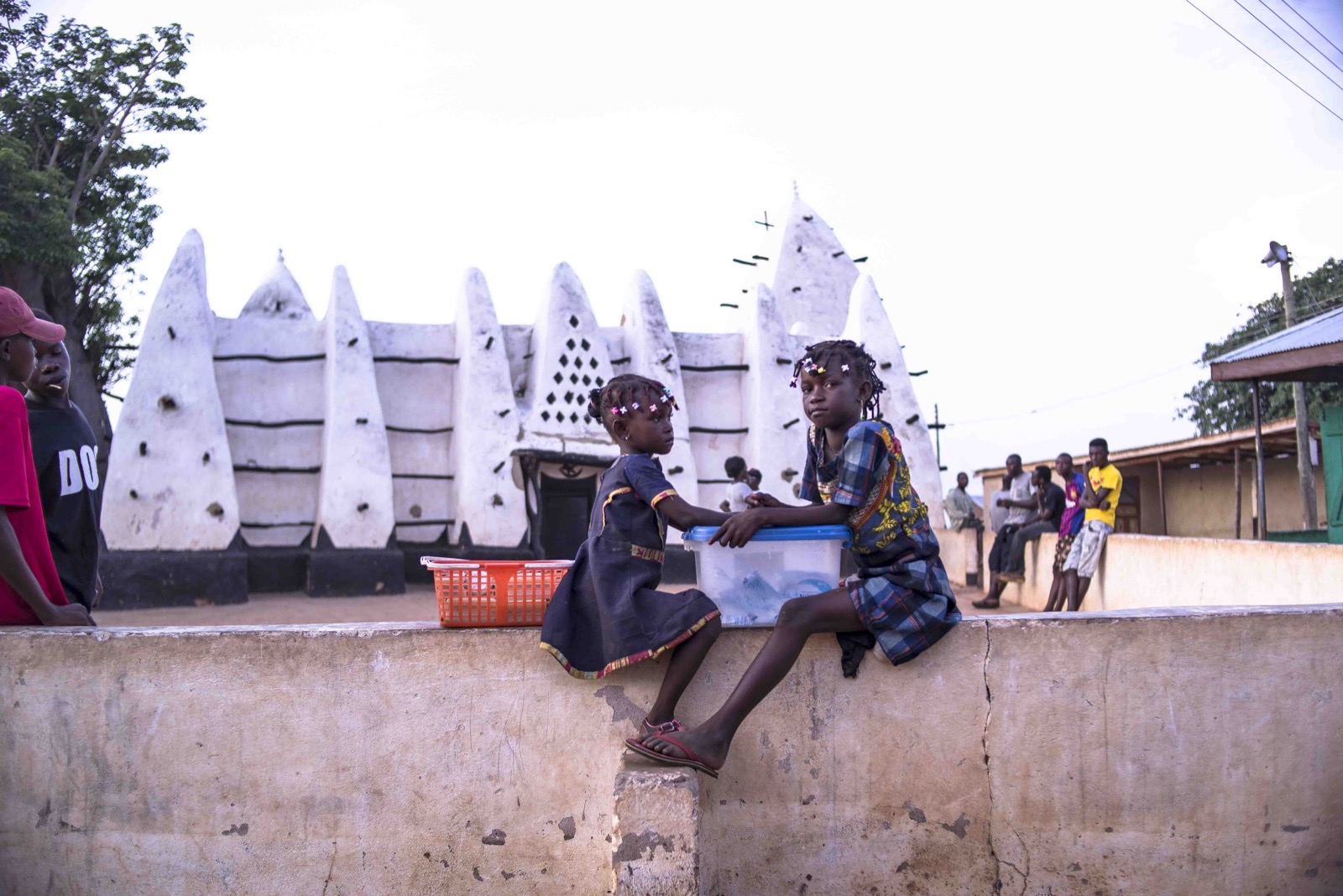
Larabanga Mosque
A historic mosque in northern Ghana where Islamic learning, local craft and sacred tradition meet.
Narration available · 2 min
Listen to the story
Larabanga Mosque, narrated.
Read transcript
A historic mosque in northern Ghana where Islamic learning, local craft and sacred tradition meet.
A northern gateway. Larabanga stands within a northern Ghanaian landscape shaped by trade, farming, Islamic learning and movement across the savannah. The mosque's distinctive earthen form belongs to a wider West African architectural tradition that adapted local materials to climate and community life. Its story should not begin with a mysterious building appearing by itself. It begins with people, routes, teachers and settlements that made a sacred place possible.
Sacred tradition and record. Local traditions connect the mosque to an early Muslim scholar and to a divinely guided foundation story. Those traditions are important to the community and help explain the mosque's spiritual meaning. Exact construction dates and origin details are harder to establish with certainty, so interpretation must keep oral tradition distinct from documentary evidence. This is not a weakness. It shows how historical places can carry several kinds of truth that need to be named clearly.
Care and continuity. The mosque has required repeated care because earthen architecture is vulnerable to rain, erosion and unsuitable repair. Preservation is therefore part of the story, not an afterthought. The building remains a place of worship and community meaning, not simply an old object for visitors. Larabanga helps widen Ghana's heritage map beyond the coast. It connects northern religious history, architecture, local custodianship and the question of how a living sacred site should be visited. Its story also changes the way a visitor sees Ghana's geography. The coast is not the only place where world-facing histories, cultural exchange and deep memory can be found. That is why this landmark belongs in the national story.
Larabanga expands Ghana's heritage story into the savannah and shows how sacred architecture survives through community care.
A northern gateway
Larabanga stands within a northern Ghanaian landscape shaped by trade, farming, Islamic learning and movement across the savannah. The mosque's distinctive earthen form belongs to a wider West African architectural tradition that adapted local materials to climate and community life. Its story should not begin with a mysterious building appearing by itself. It begins with people, routes, teachers and settlements that made a sacred place possible.
Sacred tradition and record
Local traditions connect the mosque to an early Muslim scholar and to a divinely guided foundation story. Those traditions are important to the community and help explain the mosque's spiritual meaning. Exact construction dates and origin details are harder to establish with certainty, so interpretation must keep oral tradition distinct from documentary evidence. This is not a weakness. It shows how historical places can carry several kinds of truth that need to be named clearly.
Care and continuity
The mosque has required repeated care because earthen architecture is vulnerable to rain, erosion and unsuitable repair. Preservation is therefore part of the story, not an afterthought. The building remains a place of worship and community meaning, not simply an old object for visitors. Larabanga helps widen Ghana's heritage map beyond the coast. It connects northern religious history, architecture, local custodianship and the question of how a living sacred site should be visited. Its story also changes the way a visitor sees Ghana's geography. The coast is not the only place where world-facing histories, cultural exchange and deep memory can be found. That is why this landmark belongs in the national story.
Why this place matters
Larabanga expands Ghana's heritage story into the savannah and shows how sacred architecture survives through community care.
Visiting with care: Respect worship and local guidance, and do not present uncertain foundation traditions as settled construction dates.
Where this is today
Larabanga Mosque
Savannah Region · Exact surviving site
Open modern mapSources
Read the references behind this story.
Image credit: Amuzujoe via Wikimedia Commons · Image source
 Continue to National Museum of GhanaNational Museum of GhanaAn Accra museum where archaeology, ethnography and art bring many Ghanaian histories into one public conversation.