A place in the story
The Big Tree
A giant tree stop in Ghana's Eastern Region that makes age, scale and the value of ordinary roadside nature visible.
Narration available · 2 min
Listen to the story
The Big Tree, narrated.
Read transcript
A giant tree stop in Ghana's Eastern Region that makes age, scale and the value of ordinary roadside nature visible.
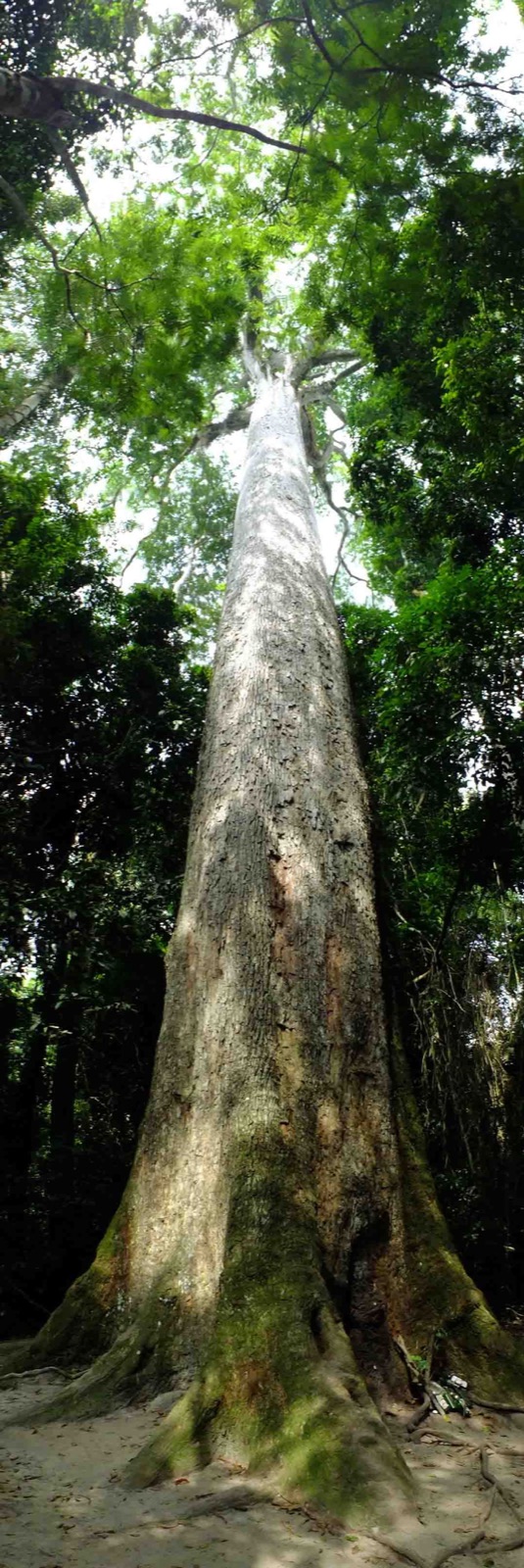
Some landmarks do not need a building. The Big Tree is easy to underestimate because it does not look like a museum or castle. Its claim is scale: a living tree whose height and age turn a roadside stop into a moment of attention. Trees are often treated as background until one becomes large enough to interrupt the route. Then the questions arrive. How long has it stood here? What has the surrounding landscape become while it grew?
A living record. A giant tree holds time differently from a monument. Its story is written in growth, shade, roots and the habitat that gathers around it. People may give it names and memories, while scientists and conservationists ask how to protect it. The tree is part of the Eastern Region's wider landscape, not an isolated miracle. Seeing it properly means noticing the road, farms, settlements and other living systems around the trunk.
Keep the stop in proportion. This is a short nature visit rather than a full-day attraction, so set expectations honestly. Go in daylight, follow local access rules and do not damage the tree or surrounding ground. The Big Tree earns its place in a Ghana landmark library because it changes the scale of the familiar. It reminds travellers that the country is also held together by living landmarks, and that preservation can mean leaving something alone long enough to keep growing. Read this place alongside the people who maintain it. A landmark becomes useful when it changes what you notice next: the road into a town, the work around a museum, the river beyond a view, or the memory a guide chooses to explain.
The Big Tree turns a simple roadside stop into a conversation about living heritage, time and conservation.
Some landmarks do not need a building
The Big Tree is easy to underestimate because it does not look like a museum or castle. Its claim is scale: a living tree whose height and age turn a roadside stop into a moment of attention. Trees are often treated as background until one becomes large enough to interrupt the route. Then the questions arrive. How long has it stood here? What has the surrounding landscape become while it grew?
A living record
A giant tree holds time differently from a monument. Its story is written in growth, shade, roots and the habitat that gathers around it. People may give it names and memories, while scientists and conservationists ask how to protect it. The tree is part of the Eastern Region's wider landscape, not an isolated miracle. Seeing it properly means noticing the road, farms, settlements and other living systems around the trunk.
Keep the stop in proportion
This is a short nature visit rather than a full-day attraction, so set expectations honestly. Go in daylight, follow local access rules and do not damage the tree or surrounding ground. The Big Tree earns its place in a Ghana landmark library because it changes the scale of the familiar. It reminds travellers that the country is also held together by living landmarks, and that preservation can mean leaving something alone long enough to keep growing. Read this place alongside the people who maintain it. A landmark becomes useful when it changes what you notice next: the road into a town, the work around a museum, the river beyond a view, or the memory a guide chooses to explain.
Why this place matters
The Big Tree turns a simple roadside stop into a conversation about living heritage, time and conservation.
Visiting with care: Treat it as a short stop on a regional route, visit in daylight and do not climb, carve or damage the tree.
Where this is today
The Big Tree
Eastern Region · Exact surviving site
Open modern mapSources
Read the references behind this story.
Image credit: Minham0910 via Wikimedia Commons · Image source
 Continue to Larabanga Mystic StoneLarabanga Mystic StoneA small sacred site near Larabanga Mosque where oral history, belief and the limits of written records meet.